Come see the difference C&G makes. Offering expert full-service mechanical, maintenance & repair in addition to our top rated collision and paint shop.
Looking for expert auto body and paint services at competitive prices? Our shop specializes in restoring and enhancing your vehicle’s appearance while providing top-notch service, maintenance and repairs. We ensure your car not only looks great but also performs at its best!
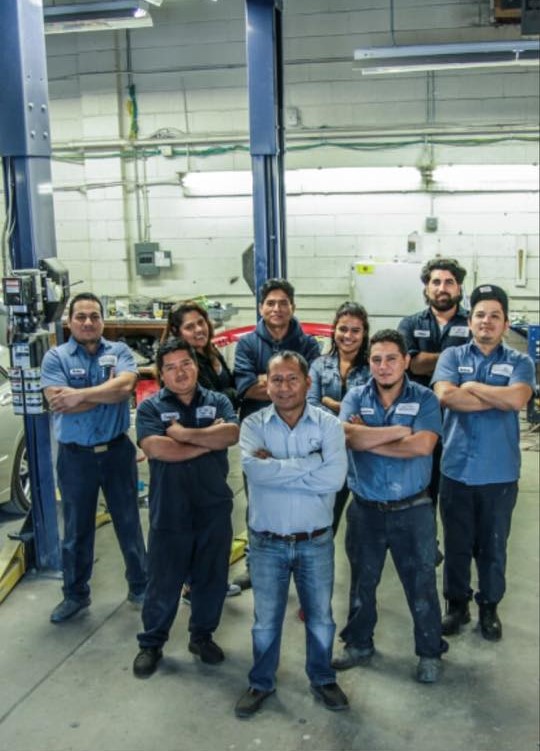
Years of Experience
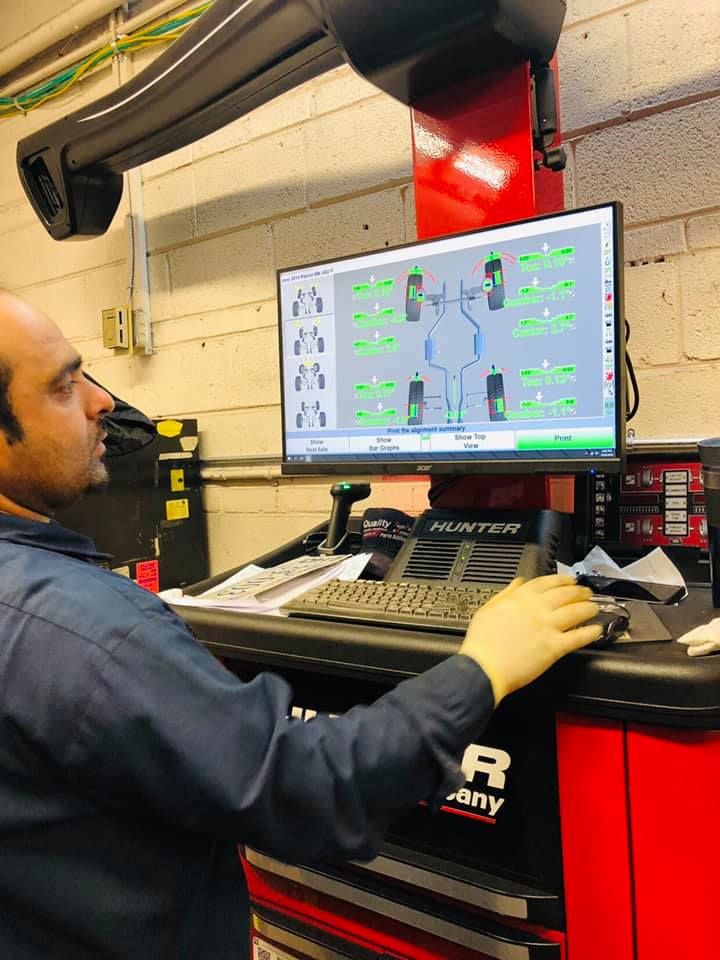

Our skilled technicians provide top-quality paint work, autobody, and general automotive repairs to keep your car looking and running like new. With expert skill and attention to detail, we ensure every job is done right the first time. Trust us for reliable service at a fair price, every time. That’s our guarantee!
Hear from our satisfied customers about our exceptional work, customer care and honest pricing here in Lanham MD!
Posted on Google
 Ed Gray
Trustindex verifies that the original source of the review is Google.
The staff were super friendly and supportive. The work was done professionally and completed on time. I would use them again!Posted on Google Percy HuamanI brought my car to C&G because it had a mechanical issue. The car broke down at 7:30 PM, and luckily, when I called the shop, they answered right away. They sent a tow truck for me, and the next day, I got the diagnosis. The service was fast and affordable. My technician, Tam, did an excellent job with both the diagnosis and the repair. I had my car back quickly and at a great price. From now on, C&G is my shop! Tam kept me updated with texts and photos, showing me exactly what the problem was and how they fixed it. Super professional all the way. Highly recommend!Posted on Google
 Eric Cioffi
Trustindex verifies that the original source of the review is Google.
TLDR: Some initial issues with my repair but top notch customer service. Adrian is great. There were some issues with my rocker panel repair starting with delays ordering the part, and then it turned out to be the wrong part. They assured me could do the repair perfectly without the part, and I said ok hesitantly. When I picked up the car the work was not up to standard. The texture (sort of pebbled) was not uniform across the whole panel (it cut off suddenly), and where it was applied on the repaired panel it did not match the factory panel on the other side of the car. (It was rougher.) Also on that other side there was a dent I did not remember being there before. I will say that when I explained my concerns over the phone they had me bring the car back and redid the repair free of charge, as well as fix the other dent. Overall it was somewhat of a hassle but I was really impressed with the customer service, and the end result seems to be satisfactory.Posted on Google grendis cifuentesI came to this shop four different ocasión and always left happy and very satisfied, thank you for your hard work C&G Specialty.Posted on Google
 glenda floresFirst experience was a great one! Adrian and Walter were very attentive, polite, and patient. Service was provided on the same day, no appointment necessary (in my experience), and not a long duration of time either. Surely will be returning, when needed.Posted on Google
 R DThese guys are the best!Posted on Google
 Walter FrancoAlways doing fantastic work.Posted on Google
 Maria QuispeThis place is awesome! I had an issue with my car recently and they took care of it quickly and professionally. The guys are super friendly. Adrian and Sergio explained everything clearly and helped throughout the entire process. Thank you!
Experience the top-tier work and customer service that makes C&G the very best in Lanham MD & the DMV.
From flawless auto body work to reliable repairs, we’ll restore your vehicle’s look and performance with expert care in Lanham MD and surrounding areas!
Come to us for all of your general automotive needs, from trouble-shooting and diagnostics to regular servicing and insurance claims. C&G has you covered!
With a focus on precision paint and autobody work, our shop delivers top-quality repairs to restore your vehicle’s appearance to factory specs.
Specializing in professional auto paint services, our shop ensures a flawless finished product.
Fully equipped for wheel alignments. We are able to mount, balance & repair tires as well as provide wheel and rim repair.
We also assist with towing and rental car needs and can drop you off at your home or work if you live near by.
Our shop provides fluid servicing and expert transmission replacement to keep you shifting smoothly.
Best prices with top quality fluids and parts for your vehicle.
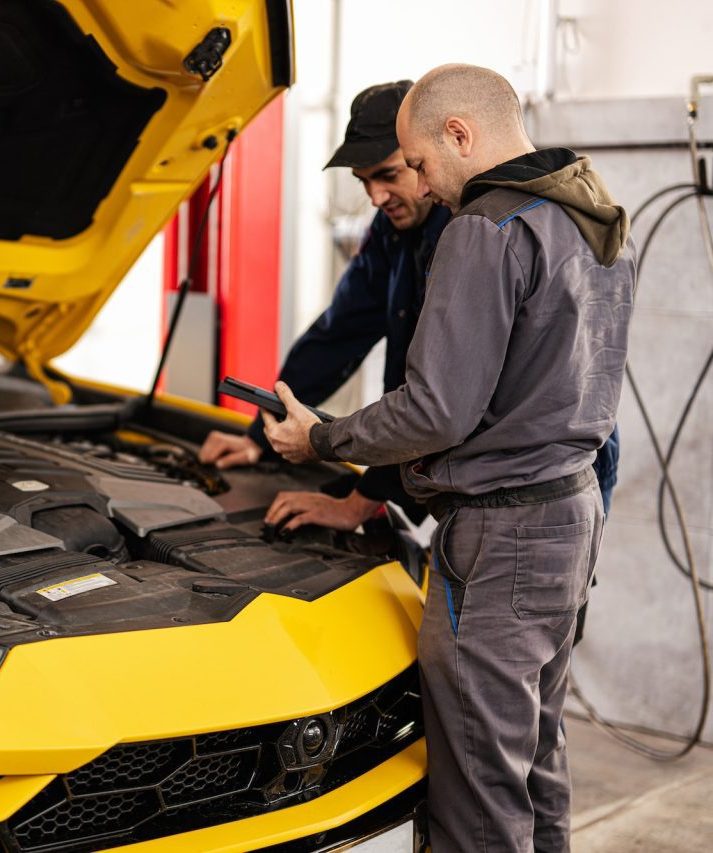
We prioritize quality and customer satisfaction in every auto body, paint, and repair service we provide in Lanham MD!
The automotive industry is undergoing rapid transformation, and the collision repair sector is evolving alongside it. For autobody professionals, this means adapting to new technologies, materials, and methodologies that are reshaping how vehicles are repaired and maintained. Below, we explore key trends that define the future of collision repair and discuss their implications for those working in the field.
With automotive manufacturers increasingly using advanced materials like aluminum, carbon fiber, and high-strength steel to improve vehicle performance and fuel efficiency, autobody professionals must adapt their techniques and tools. These materials require specialized knowledge for repairs due to their unique properties.
Key changes for autobody professionals include:
– New Equipment Investments: Specialized tools such as aluminum repair stations or carbon fiber bonding kits will become essential.
– Training Requirements: Technicians will need certifications to work on modern materials safely and effectively.
– Repair vs. Replace Decisions: Increased use of composites may lead to more replacement of damaged components instead of traditional repairs.
| Material | Challenges for Repairs | Required Skills/Tools |
| Aluminum | Prone to corrosion; requires clean spaces | Aluminum welders, heat guns |
| Carbon Fiber | Delamination risks; high cost | Bonding kits, sanding tools |
| High-Strength Steel | Limited malleability | Advanced welding equipment |
The rise of EVs is another factor redefining collision repair practices. Unlike traditional internal combustion engine vehicles, electric cars have unique systems such as battery packs that require careful handling during repairs.
Considerations for autobody professionals working with EVs:
– High Voltage Systems: Special training on how to disconnect and handle high-voltage components safely is crucial.
– Battery Replacement Challenges: Damaged batteries often need precise alignment or complete replacement rather than simple fixes.
– Lightweight Designs: EV manufacturers prioritize low-weight designs that incorporate advanced composites needing specialized repair techniques.
Automation is becoming a core component of collision repair operations by streamlining workflows and improving accuracy.
Examples of automated systems impacting the industry include:
– 3D Scanning Technology: Used to assess damage with high precision before repairs begin. This reduces guesswork while improving estimates’ accuracy. – Automated Paint Booths: These systems ensure uniform paint application for consistent results while reducing material waste. – Robotic Welding Systems: Capable of performing intricate welding tasks faster than manual methods.
While these advancements introduce challenges, they also create significant opportunities:
1. Upskilling Opens New Career Pathways: Learning cutting-edge technologies positions technicians for higher-paying roles in specialized facilities. 2. Increased Efficiency: Automated systems allow professionals more time to focus on complex tasks while repetitive processes are handled by machines. 3. Better Customer Satisfaction: Enhanced precision leads to superior-quality repairs that build trust with clients.
By staying informed about industry trends and continuously updating skills through certifications or training programs, autobody professionals can remain competitive in this rapidly changing landscape.
The automotive repair industry has seen a dramatic transformation over the past decade, and technology continues to play a pivotal role in reshaping how autobody professionals approach their work. Innovations in tools, processes, and systems have not only enhanced efficiency but also improved the accuracy and quality of repairs. Below, we explore several ways technology is revolutionizing the autobody repair landscape.
Modern collision repair begins with accurate diagnostics. Traditional methods of identifying damage often relied on manual inspection, which left room for human error. Today’s advanced diagnostic tools allow technicians to pinpoint issues quickly and precisely.
Automation is streamlining processes that were once time-intensive and labor-intensive. By incorporating automated systems into their workflows, autobody shops can enhance productivity and reduce turnaround time.
| Process | Traditional Method | Automated Method | Impact on Repair Time |
| Paint Mixing | Manually measured | Computer-controlled systems | Reduces errors and waste |
| Frame Alignment | Manual adjustments | Laser-guided alignment benches | Increases precision |
| Damage Assessment | Visual inspection | AI-based tools with sensors | Faster and more reliable |
This integration creates safer learning environments while accelerating skill development.
Technology is driving substantial changes across all aspects of autobody repair work—from diagnostics to training—empowering professionals with better tools for success while improving customer satisfaction through faster service delivery.
The rise of electric vehicles (EVs) is redefining the autobody repair industry. As EVs become increasingly popular, professionals in collision repair are facing new opportunities and challenges. Understanding how EV technology impacts repairs is essential for staying competitive in this evolving landscape.
| Component | ICE Vehicle Consideration | EV-Specific Concern |
| Powertrain | Internal combustion engine repairs | High-voltage battery and motor system repairs |
| Structural Materials | Primarily steel | Aluminum, carbon fiber, or composite materials |
| Cooling Systems | Radiators | Battery cooling systems |
As electric vehicle adoption continues accelerating globally, understanding its implications is integral for modern autobody professionals aiming to deliver safe and efficient services while adapting to technological advancements shaping the industry’s future trajectory.
The automotive repair industry is undergoing a transformation, largely driven by advancements in automated systems. These systems are not only expediting processes but also improving accuracy, safety, and efficiency. Autobody professionals are finding themselves at the intersection of traditional craftsmanship and cutting-edge technology.
| Aspect | Traditional Methods | Automated Systems |
| Diagnostics | Manual inspection | AI-driven scanning solutions |
| Frame Alignment | Physical measurement tools | Laser-guided accuracy |
| Paint Matching | Technician experience-dependent | Robotic color-matching technology |
| Time Efficiency | Longer processing times | Accelerated workflows |
| Error Rate | Higher chances of inaccuracies | Minimal due to automation |
As vehicles continue evolving—with trends such as autonomous driving and electrification—automated systems will play an even larger role in autobody operations. For professionals in this field, staying ahead requires embracing these technologies while continuously updating their skills to adapt to this new era of innovation.
The integration of automated systems into collision repair operations has significantly transformed the autobody industry. These systems not only enhance efficiency but also improve precision, reduce human error, and provide a better overall experience for both technicians and customers. Below is an in-depth overview of how automated systems are shaping this field.
| Automated Technology | Function | Benefits |
| Laser Measuring Systems | Measures damaged vehicle frames with extreme precision | Accurate diagnostics & faster repairs |
| Robotic Painting Arms | Performs consistent paint applications over car surfaces | Uniform coverage & reduced overspray |
| 3D Scanning Technology | Digitally maps vehicle damage for repair planning | Improved customization & accuracy |
| AI-Powered Estimation Tools | Analyzes photos to estimate repair costs | Faster estimate generation |
As technology continues evolving, we can expect even more sophisticated automation in autobody repairs:
– Self-calibrating tools will further increase accuracy without requiring manual adjustments from technicians. – AI-driven platforms might soon provide predictive analytics about potential future issues based on vehicle data history. – Fully autonomous robotic systems could eventually handle complex repairs without human intervention.
By leveraging these advancements thoughtfully, autobody professionals can stay competitive while delivering superior service quality efficiently—ensuring they remain valuable contributors in the rapidly evolving automotive industry ecosystem.