Come see the difference C&G makes. Offering expert full-service mechanical, maintenance & repair in addition to our top rated collision and paint shop.
Looking for expert auto body and paint services at competitive prices? Our shop specializes in restoring and enhancing your vehicle’s appearance while providing top-notch service, maintenance and repairs. We ensure your car not only looks great but also performs at its best!
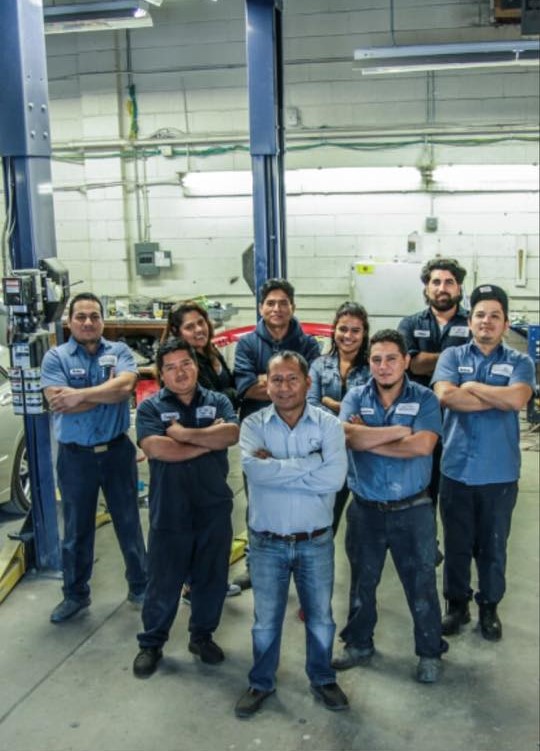
Years of Experience

Our skilled technicians provide top-quality paint work, autobody, and general automotive repairs to keep your car looking and running like new. With expert skill and attention to detail, we ensure every job is done right the first time. Trust us for reliable service at a fair price, every time. That’s our guarantee!
Hear from our satisfied customers about our exceptional work, customer care and honest pricing here in Springfield, VA!
Posted on GoogleTrustindex verifies that the original source of the review is Google. The staff were super friendly and supportive. The work was done professionally and completed on time. I would use them again!Posted on GoogleTrustindex verifies that the original source of the review is Google. I brought my car to C&G because it had a mechanical issue. The car broke down at 7:30 PM, and luckily, when I called the shop, they answered right away. They sent a tow truck for me, and the next day, I got the diagnosis. The service was fast and affordable. My technician, Tam, did an excellent job with both the diagnosis and the repair. I had my car back quickly and at a great price. From now on, C&G is my shop! Tam kept me updated with texts and photos, showing me exactly what the problem was and how they fixed it. Super professional all the way. Highly recommend!Posted on GoogleTrustindex verifies that the original source of the review is Google. TLDR: Some initial issues with my repair but top notch customer service. Adrian is great. There were some issues with my rocker panel repair starting with delays ordering the part, and then it turned out to be the wrong part. They assured me could do the repair perfectly without the part, and I said ok hesitantly. When I picked up the car the work was not up to standard. The texture (sort of pebbled) was not uniform across the whole panel (it cut off suddenly), and where it was applied on the repaired panel it did not match the factory panel on the other side of the car. (It was rougher.) Also on that other side there was a dent I did not remember being there before. I will say that when I explained my concerns over the phone they had me bring the car back and redid the repair free of charge, as well as fix the other dent. Overall it was somewhat of a hassle but I was really impressed with the customer service, and the end result seems to be satisfactory.Posted on GoogleTrustindex verifies that the original source of the review is Google. I came to this shop four different ocasión and always left happy and very satisfied, thank you for your hard work C&G Specialty.Posted on GoogleTrustindex verifies that the original source of the review is Google. First experience was a great one! Adrian and Walter were very attentive, polite, and patient. Service was provided on the same day, no appointment necessary (in my experience), and not a long duration of time either. Surely will be returning, when needed.Posted on GoogleTrustindex verifies that the original source of the review is Google. These guys are the best!Posted on GoogleTrustindex verifies that the original source of the review is Google. Always doing fantastic work.Posted on GoogleTrustindex verifies that the original source of the review is Google. This place is awesome! I had an issue with my car recently and they took care of it quickly and professionally. The guys are super friendly. Adrian and Sergio explained everything clearly and helped throughout the entire process. Thank you!
Experience the top-tier work and customer service that makes C&G the very best in Springfield, VA & the DMV.
From flawless auto body work to reliable repairs, we’ll restore your vehicle’s look and performance with expert care in Springfield, VA and surrounding areas!
Come to us for all of your general automotive needs, from trouble-shooting and diagnostics to regular servicing and insurance claims. C&G has you covered!
With a focus on precision paint and autobody work, our shop delivers top-quality repairs to restore your vehicle’s appearance to factory specs.
Specializing in professional auto paint services, our shop ensures a flawless finished product.
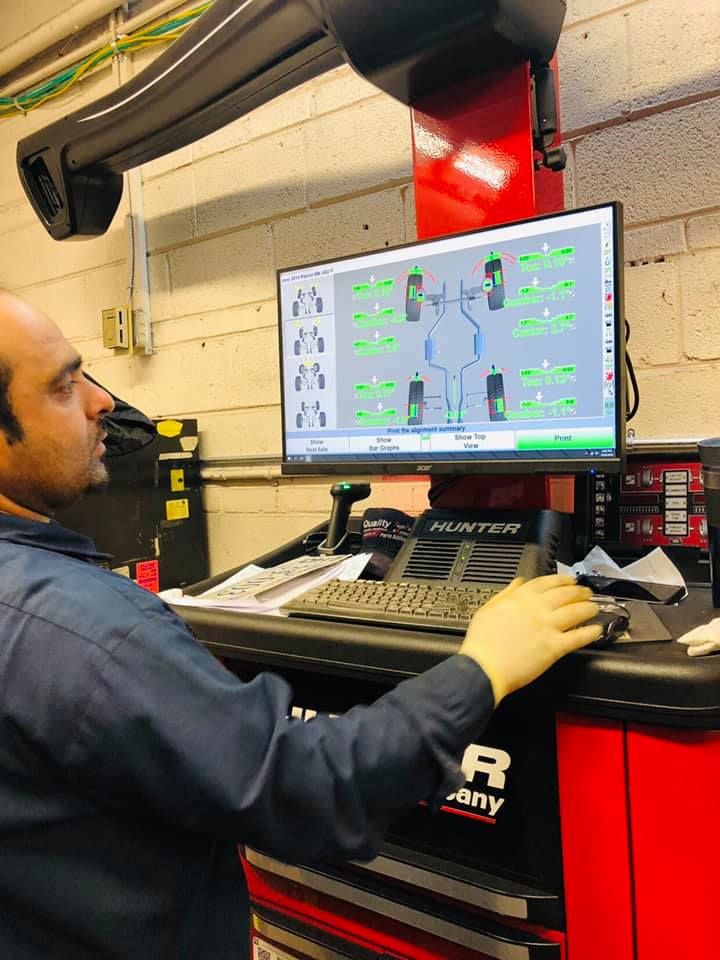
Fully equipped for wheel alignments. We are able to mount, balance & repair tires as well as provide wheel and rim repair.
We also assist with towing and rental car needs and can drop you off at your home or work if you live near by.
Our shop provides fluid servicing and expert transmission replacement to keep you shifting smoothly.
Best prices with top quality fluids and parts for your vehicle.
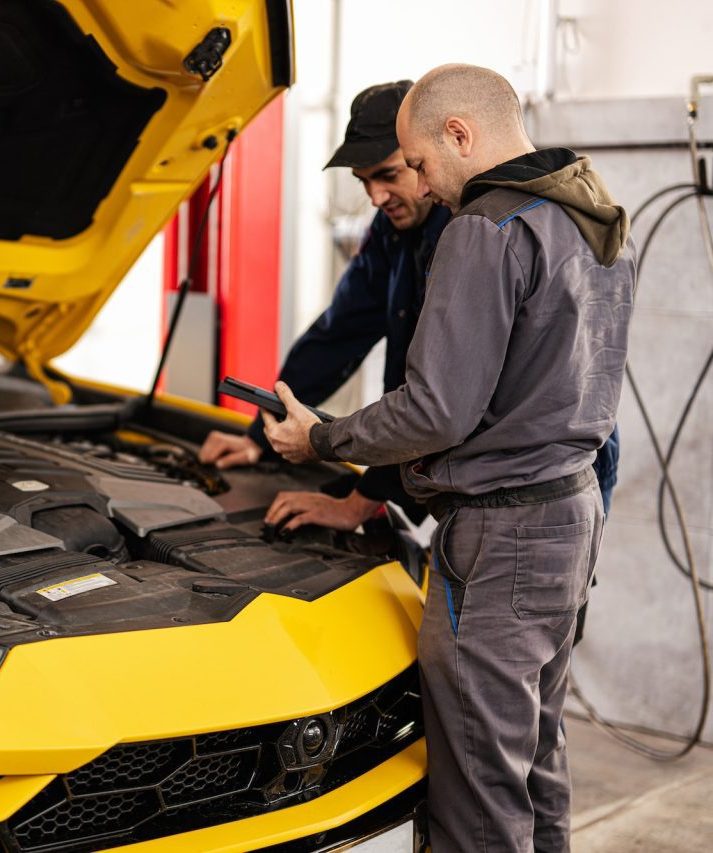
We prioritize quality and customer satisfaction in every auto body, paint, and repair service we provide in Springfield, VA!
The automotive industry has undergone a significant transformation in recent decades, with advancements in vehicle construction playing a major role. Modern vehicles now incorporate cutting-edge materials, innovative technologies, and advanced safety systems that aim to make driving safer and more efficient. However, these advancements have also introduced new challenges for auto body shops tasked with repairing these vehicles after collisions. Let’s explore how modern vehicle construction has reshaped the world of collision repair.
One of the most notable changes in modern vehicle construction is the use of lightweight materials to improve fuel efficiency and reduce emissions. Materials such as aluminum, high-strength steel, carbon fiber composites, and even magnesium alloys are increasingly found in today’s cars.
Repair technicians must have the tools and training necessary to handle this level of complexity accurately.
Most modern vehicles use unibody construction instead of the traditional body-on-frame design once common in trucks and older cars. The unibody design integrates the frame with the body structure for improved crash performance and reduced weight.
| Key Comparison | Body-on-Frame | Unibody |
| Repair Complexity | Easier to separate damaged parts | Requires precision reshaping |
| Typical Use Cases | Trucks/SUVs | Sedans/Crossovers |
| Crash Energy Management | Less efficient | Superior crumple zones |
Unibody repairs demand precision equipment like computerized measuring systems to ensure proper alignment after an accident.
The increasing reliance on electronics has further complicated collision repair processes. Beyond ADAS technology, vehicles now feature interconnected infotainment systems, smart lighting arrays, electric drivetrains, and more sophisticated engine management software—all of which can be affected during a collision.
For instance: – Damaged wiring harnesses may result in cascading faults across multiple vehicle systems. – Post-repair diagnostic scans are often necessary to identify hidden electrical issues caused by impact forces.
To keep up with advancements in vehicle construction: 1. Invest in ongoing technician training programs focused on modern materials and ADAS calibration techniques. 2. Equip facilities with specialized tools such as rivet guns for aluminum repairs or laser measuring systems for unibody alignment. 3. Partner with OEM-certified programs to gain access to proprietary repair procedures.
Modern vehicle construction has elevated both consumer safety standards and environmental sustainability goals while simultaneously pushing auto body shops toward greater technical expertise. By adapting to these changes through proper education and investment in technology, repair professionals can ensure high-quality solutions that meet the demands of today’s complex automotive designs.
In recent decades, vehicle construction has undergone a transformative evolution, largely driven by advancements in technology, safety standards, and environmental considerations. These changes have directly impacted how modern auto body shops approach collision repairs, requiring new tools, techniques, and expertise.
Automakers today are prioritizing fuel efficiency and sustainability.
– Aluminum: Strong but lightweight, it’s now frequently used in body panels. However, aluminum requires specialized repair techniques since it behaves differently during welding or dent repair compared to traditional steel.
– Carbon Fiber: Known for its durability and minimal weight, carbon fiber often appears in high-performance vehicles. It is expensive to repair due to the precision required when working with such material.
– High-Strength Steel (HSS): Unlike traditional steel, HSS offers enhanced safety through increased rigidity while reducing weight. However, repairing HSS requires advanced tools to avoid compromising structural integrity.
| Material | Key Features | Repair Complexity | Cost Efficiency |
| Aluminum | Lightweight yet strong | High | Moderate |
| Carbon Fiber | Extremely durable | Very High | Low |
| High-Strength Steel (HSS) | Enhanced safety & rigidity | Moderate | Moderate |
The integration of these technologies has made collision repairs more complex.
Vehicles today employ crumple zones designed to absorb impact energy during a collision.
– Accurately restoring crumple zones is critical to preserving the car’s crashworthiness. – Replacement parts must meet Original Equipment Manufacturer (OEM) specifications to ensure proper alignment and strength.
Given the complexity of modern vehicle design: – Auto body shops need technicians who are trained in OEM-certified repair methods. – Certification programs from manufacturers like Tesla or BMW help ensure shops stay updated on specific repair protocols.
By understanding how vehicle construction has evolved over time and adapting accordingly, modern auto body shops can provide safe and effective repairs that maintain both functionality and aesthetic appeal while addressing the unique challenges posed by contemporary automotive design.
A thorough pre-repair inspection has become a cornerstone of modern auto body shop practices. With the increasing complexity of today’s vehicles, detecting underlying issues before beginning repairs ensures safety, efficiency, and accuracy throughout the process. Skipping or inadequately performing this step can lead to incomplete repairs, unexpected delays, and increased costs for both the technician and customer.
As a result, damage from collisions often extends beyond what is immediately visible. A pre-repair inspection helps identify hidden problems that could go unnoticed but have serious consequences down the line.
Auto body shops employ systematic processes to perform comprehensive inspections.
| Technology | Benefit |
| Digital Scanners | Detect internal system malfunctions quickly. |
| 3D Imaging Systems | Provide precise measurements of vehicle alignment post-collision. |
| Cloud-Based Repair Platforms | Enable real-time sharing of findings with customers and insurers. |
These tools not only improve accuracy but also save time by streamlining workflows within busy auto shops.
From the customer’s perspective, thorough pre-repair inspections offer peace of mind by ensuring their vehicle is restored to its original condition—or better—after an accident. Clear documentation also helps eliminate disputes over insurance coverage by providing evidence-backed assessments of required repairs.
By prioritizing detailed pre-repair inspections in every job they undertake, modern auto body shops demonstrate their commitment not only to technical excellence but also customer satisfaction and long-term vehicle performance reliability.
When a vehicle undergoes structural repairs or panel replacements—such as fixing bumpers or windshields where ADAS components are mounted—their positioning can shift slightly.
– Incorrect distance measurements for collision warnings
– Malfunctioning lane departure alerts
– Delayed or false activation of emergency braking systems
Consequently, recalibrating these systems is not just a recommendation—it’s a requirement to restore the vehicle’s safety standards.
Some vehicles may need both static and dynamic calibration depending on their make and model.
ADAS recalibration should be performed in several scenarios beyond collision repairs:
– Windshield Replacement:Many vehicles have forward-facing cameras mounted on the windshield; replacing it alters their alignment.
– Bumper Repair/Replacement:Parking sensors or radars embedded within bumpers need precise alignment after replacement or repainting.
– Suspension Work:Adjustments to suspension can change a vehicle’s height, affecting sensor angles.
– Wheel Alignment Changes:Misaligned wheels can interfere with some ADAS calculations such as steering-angle sensors used for lane guidance.
Proper calibration demands highly specialized equipment like optical alignment boards, laser-based tools, diagnostic software platforms, and more—all customized for specific manufacturers’ vehicles.
– Technicians must undergo continuous training to stay updated on evolving ADAS technology across brands. – OEM (Original Equipment Manufacturer) procedures must be strictly followed to maintain warranty compliance.
| Equipment/Tool | Purpose | Example of Use Case |
| Diagnostic Scanner | Reads vehicle error codes | Validates sensor calibration |
| Alignment Targets | Static calibration visual markers | Re-aligns camera placement |
| Radar Reflectors | Tests radar accuracy | Fine-tunes adaptive cruise |
Investing time in proper ADAS calibration ensures:
1.Driver Safety:Restores full functionality of life-saving technology such as emergency braking. 2.Accident Prevention:Accurate readings reduce risks of false positives or missed threats on the road. 3.Legal Compliance:Many regions mandate that repaired vehicles meet original safety standards post-repair. 4.Customer Satisfaction:Drivers experience seamless performance without unexpected system errors.
As technology continues advancing rapidly in modern cars, calibrating safety sensors is no longer an optional step—it is an integral part of professional auto body repair work that prioritizes both quality assurance and customer safety effectively.
Final inspections are a critical step in the auto body repair process, ensuring that every detail has been addressed and the vehicle is returned to its pre-accident condition—or better. A thorough final inspection not only guarantees quality workmanship but also promotes customer safety and satisfaction. Here’s a closer look at why this stage is essential and what it involves.
The final inspection process serves several key purposes:
– Ensuring Safety Standards Are Met: Every vehicle component repaired or replaced must meet manufacturer safety specifications to ensure the car is roadworthy.
– Verifying Aesthetic Quality: From paint matching to panel alignment, the car’s appearance should be seamless, with no visible signs of previous damage.
– Identifying Oversights: Even with advanced tools and skilled technicians, small errors can occur during repairs. The final inspection acts as a last check before delivery to the customer.
Auto body shops typically follow a checklist during final inspections to maintain consistency and efficiency.
Technicians often rely on advanced tools to assist in performing accurate inspections: – Digital Measuring Systemshelp confirm frame or unibody accuracy within millimeter tolerances.Spectrophotometersensure perfect color matching for complex modern paint formulas. – Diagnostic software scans electronic systems for faults after calibration processes.
| Inspection Aspect | Tools Commonly Used | Importance |
| Frame Alignment | Digital Measuring System | Ensures crashworthiness |
| Paint Matching | Spectrophotometer | Consistent aesthetic quality |
| Sensor Calibration | Advanced Diagnostics Software | Restores ADAS functionality |
Experienced technicians know where issues might arise after repair work—whether it’s hidden structural weaknesses or improperly calibrated sensors—and use their expertise to pinpoint problems that untrained eyes could overlook. Moreover, professional auto body shops adhere strictly to OEM (Original Equipment Manufacturer) guidelines during the inspection process, ensuring customers receive top-tier service backed by industry standards.
By investing time into comprehensive final inspections, today’s auto body shops provide more than just repairs—they deliver peace of mind that your vehicle is safe, functional, and cosmetically flawless when it leaves their care.
When it comes to vehicle repairs, cutting corners may seem like a cost-effective option in the short term. However, investing in professional auto body repairs delivers significant benefits that far outweigh any initial savings. From ensuring safety to preserving resale value, here’s why choosing professional repairs is an investment worth making.
If repairs are not handled by trained professionals using the correct methods: – Critical structural components may remain compromised. – Safety systems like airbags or seatbelts might fail in future impacts. – Misaligned frames could degrade handling and make the car unsafe to drive.
Properly trained technicians have access to manufacturer guidelines and tools to restore your car to its original safety standards. This ensures that your vehicle performs as designed in any future accidents.
Vehicles without proper repairs lose significant resale value over time. Some key reasons include: – Poorly executed repairs are visible upon inspection (misaligned panels, uneven paintwork). – Unaddressed damage leads to long-term deterioration (e. g. , rust from improper sealing). – A history of substandard maintenance discourages potential buyers.
Certified auto body shops not only restore your car’s aesthetics but also provide documentation of quality repairs, giving you leverage during resale negotiations.
After an accident, these systems often require recalibration or replacement to maintain proper functionality. Professional repair shops have access to diagnostic tools and skilled technicians who understand how to seamlessly integrate these complex systems back into your vehicle.
| Feature | Potential Issue Without Professional Repair |
| ADAS Sensors | Calibration errors impair system performance |
| Crumple Zones | Improper repair fails to absorb impact effectively |
| Aluminum Panels | Incorrect welding leads to structural weakness |
While professional repairs may come at a higher upfront cost than quick fixes or DIY attempts, they save money over time by: – Preventing recurring issues caused by incomplete or improper work. – Reducing wear on other parts due to unresolved alignment problems. – Avoiding penalties or fines for non-compliance with insurance requirements.
Additionally, many certified shops offer warranties on their work, providing peace of mind against unforeseen complications.
Professional auto body repair facilities often adhere to strict environmental regulations regarding waste disposal and use eco-friendly materials when possible. By choosing a reputable shop, you contribute toward sustainable practices while ensuring high-quality results for your vehicle—supporting both your car’s longevity and the planet’s health.
Investing in professional auto body repair doesn’t just fix what’s broken; it ensures that your car remains safe, maintains its value, and incorporates cutting-edge technology correctly—all while saving money over time.